
The landscape of Canadian engineering is undergoing a seismic shift. As we navigate through 2026, the integration of AIOps, real-time sensor data, and decentralized ledgers has redefined what “data integrity” means for the next generation of engineers. For students at institutions like the University of Waterloo, UofT, and UBC, the transition from classroom theory to industry-standard technical documentation is no longer just about accuracy—it is about verifiable, traceable, and ethical data management.
In the current professional climate, a single discrepancy in a structural integrity report or a software load test can lead to catastrophic failures. This is why the “Iron Ring” commitment now extends deeply into the digital realm. Whether you are documenting a civil engineering project in Vancouver or a sustainable energy grid in Ontario, your ability to maintain high-fidelity technical records is your most valuable asset.
The Evolution of Engineering Reporting
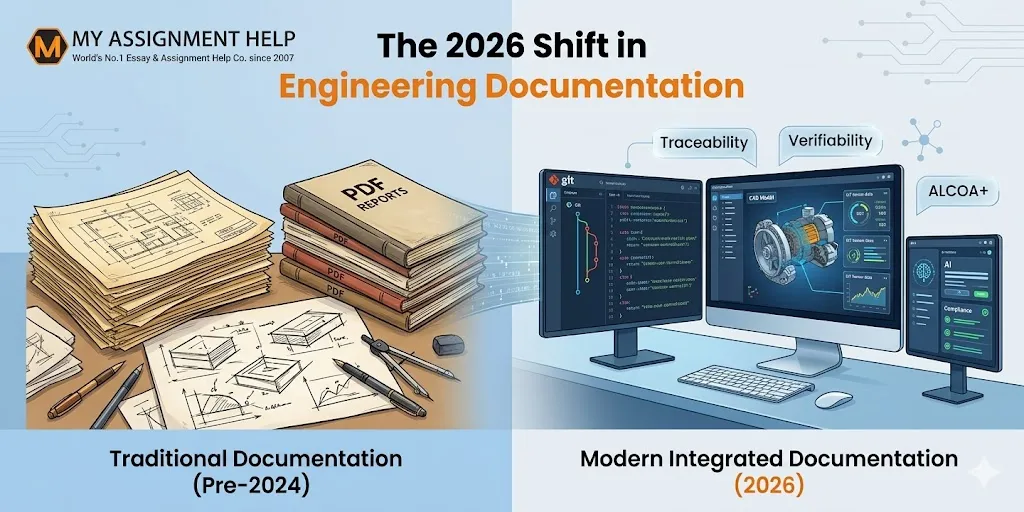
The transition toward digital-first documentation has accelerated. Below is a visual representation of how reporting standards have matured over the last few years.
| Traditional Documentation (Pre-2024) | Modern Integrated Documentation (2026) |
| Static PDF reports | Live, version-controlled documentation (Git-based) |
| Manual data entry | Automated IoT data ingestion |
| Centralized local storage | Decentralized, encrypted cloud silos |
| Occasional peer review | Continuous AI-assisted compliance checking |
The 2026 Standard: Why Data Integrity is Non-Negotiable
Data integrity refers to the maintenance and assurance of data accuracy and consistency over its entire life cycle. In 2026, the Canadian Engineering Accreditation Board (CEAB) has placed increased emphasis on “Digital Literacy and Data Stewardship.” This means that students must move beyond simple spreadsheets.
Many students often seek external guidance to master these complex reporting frameworks. For instance, a student might collaborate with a consultant at MyAssignmentHelp, who provides the high-level strategic oversight and the professional assignment help required to meet the rigorous Canadian academic benchmarks of 2026. This type of professional mentorship ensures that the documentation not only meets university rubrics but also aligns with the ethical standards set by provincial bodies like PEO (Professional Engineers Ontario).
Navigating Lab Reports and Technical Specifications
For undergraduate and graduate students, the most immediate application of data integrity is found in the laboratory. The shift toward “Smart Labs” in Canadian universities means that data is often captured via automated sensors. However, the human element—the interpretation of that data—remains the primary source of error.
When students struggle with the synthesis of complex data sets, they often look for a specialized lab report writing service to understand how to structure their findings according to the IMRaD (Introduction, Methods, Results, and Discussion) format. Using such resources as a learning tool allows students to see how raw data is transformed into a professional narrative that maintains integrity while remaining accessible to stakeholders.
Key Pillars of Engineering Documentation in Canada
- Traceability: Every data point must have a clear “paper trail.” In 2026, this often involves metadata tagging that includes the time, equipment ID, and environmental conditions.
- Verifiability: Can a third party recreate your results using only your documentation? This is the gold standard for Canadian engineering research.
- ALCOA+ Principles: Data must be Attributable, Legible, Contemporaneous, Original, and Accurate.
Key Takeaways
- Version Control is Essential: Treat your technical documents like code. Use platforms like GitHub to track changes.
- Standardization Matters: Follow specific variations of IEEE or APA 7th edition as required by your faculty.
- Ethics First: Data integrity is a subset of professional ethics. Falsifying data is a violation of the professional code of conduct.
- Seek Professional Models: Use professional academic support to understand industry-grade report structures.
Frequently Asked Questions (FAQ)
Q: What are the most common data integrity errors in student reports?
A: Transcription errors and “cherry-picking” data to fit a hypothesis are the most frequent issues detected by 2026 auditing tools.
Q: Does using a writing service violate academic integrity?
A: Not if used as a reference or tutoring tool to understand the complex structural requirements of Canadian engineering standards.
Q: What software is standard for engineering documentation in Canada?
A: LaTeX remains the standard for formal papers, while Notion and PLM software are used for project-based documentation.
Author Bio
Liam Henderson is a Senior Content Strategist at MyAssignmentHelp with over eight years of experience in technical communication and SEO. Based in Toronto, Liam specializes in bridging the gap between academic theory and industrial application for STEM students across Canada. He has previously consulted for tech startups in the Kitchener-Waterloo corridor, focusing on data transparency and professional documentation standards.
